Showing posts with label Georgia. Show all posts

Sunday, February 22, 2026

History of Georgia Wrestling on Television

The following is a post by Georgia Wrestling historian Rich Tate from 2003 on the old Wrestling Classics message board. It is included here for historical purposes. [LINK]

More specific information about the period following Black Saturday in July of 1984 can be found on the Mid-Atlantic Gateway in the article Ole and Solie: The Evolution of TV Wrestling in Georgia after Black Saturday

* * * * * * * 


RICH TATE: I am attempting to piece together a timeline for wrestling on TV in the Atlanta area. Can anyone make corrections or fill in gaps? Especially after Black Saturday...that's where my most confusion lies. Also, if anyone can add to it by adding in what may have been happening in Macon, Columbus, Augusta and Savannah, it's very much appreciated. (Bold and italicized text is mine.)

1954: Live Atlanta Wrestling first appeared on WLWA Channel 11 (ABC affiliate), a three-year-old station, hosted by Ray McCay, who had previously been doing the radio broadcasts of local shows on WQXI-AM 790. The show would jump around the schedule throughout its run on this station, and seemed to become an afterthought more and more as time went on. Prior to that, local fans could only see what the network feeds brought in, and more recently, the shows had been sent in via tape from Texas.

1955: Ed Capral, who had been the ring announcer, replaces McCay on Live Atlanta Wrestling.

1961: Channel 11 ownership changed hands, and its call letters became WAII.

1969: Once again, new owners took over at Channel 11, and the call letters became WQXI.

1970: On January 1, Atlanta independent UHF Channel 17 (WJRJ) is purchased by Ted Turner and renamed WTCG. Les Thatcher began working as a co-host and associate producer, a position he would hold for three years.

1971: Live Atlanta Wrestling changed its name to Georgia Championship Wrestling, beginning with the program shot on August 14. On December 25, Georgia Championship Wrestling aired for the first time on WTCG in a permanent time slot, with taping in the afternoon, and airing each Saturday at 6:00 pm. This was the reason the promotion decided to change stations. It had become very difficult to keep fans coming to the studios for live matches when the schedule was so varied at Channel 11.

1972: In June, WTCG begins re-airing its Saturday tape on Wednesday night as a prime time replay. This lasted until the fall. On December 2, WTCG began airing back to back episodes of Georgia Championship Wrestling and All-South Championship Wrestling in back to back Saturday evening slots. Capral changed over immediately to the All-South program, and Sterling Brewer was called in to cover the announcing for GCW, while maintaining his job in Birmingham for Nick Gulas’ show.

1973: Brewer was replaced on Georgia Championship Wrestling by Gordon Solie, who continued to do the announcing for Championship Wrestling from Florida out of Tampa. During the summer, Georgia Championship Wrestling shifted to morning hours to tape their programs.

1974: After the closing of All-South, Georgia Championship Wrestling continued on as the sole wrestling show on WTCG.

1976: A second program, called Best of Georgia Championship Wrestling, began airing on WTCG hosted by Freddy Miller. On December 17, WTCG became the second satellite-delivered cable program service (behind Home Box Office), and the first satellite superstation. The first Georgia Championship Wrestling show that could be seen beyond Atlanta was taped and aired on December 18.

1979: WTCG changed its call letters to WTBS on August 27, with the first Georgia Championship Wrestling show taped and aired on September 1.

1982: Georgia Championship Wrestling changed its on-air name to World Championship Wrestling.

1983: A co-promotion initiated between Ole Anderson and Jerry Jarrett called GCW Superstars aired for three months on WTBS, produced and hosted by Les Thatcher.

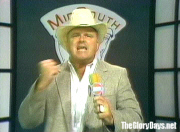
1984: On July 7, the final episode of World Championship Wrestling taped and aired on WTBS, and fans were introduced to WWF programming the following week. The WWF debuted on July 14 in WCW’s former time slot, on a day that has been dubbed by fans as “Black Saturday.” In September, a new promotion operated by Ole Anderson and Ralph Freed got an early morning time slot on WTBS each Saturday. The promotion and the show were both called Championship Wrestling from Georgia, and Gordon Solie was back as the announcer. Meanwhile, Turner sold a Sunday night time slot on WTBS to Mid-South Wrestling, hosted by Jim Ross.

Gateway Note: More specific information about the period following Black Saturday in July of 1984 can be found on the Mid-Atlantic Gateway in the article Ole and Solie: The Evolution of TV Wrestling in Georgia after Black Saturday

1985: Jim Crockett bought the Championship Wrestling from Georgia business and time slot on WTBS, and began airing World Championship Wrestling on the time slot he purchased from Vince McMahon. This version of the program was hosted by David Crockett and Tony Schiavone

Joe Pedicino began producing and hosting a show on WATL Channel 36 (Independent) that aired each Saturday night, starting at 8:00 pm. It lasted through 2:00 am, and showed tapes from various promotions around the world in their entirety.


Some responses are included below with additional or clarrifying information.

[A] KING COMBO: 
1983: A co-promotion initiated between Ole Anderson and Jerry Jarrett called GCW Superstars aired for three months on WTBS, produced and hosted by Les Thatcher."

AFAIK, didn't the full shows only air in Chattanooga (where the show was taped), and only selected matches aired on the Sunday show w/ other GCW footage?

"1984: On July 7, the final episode of World Championship Wrestling taped and aired on WTBS, and fans were introduced to WWF programming the following week. The WWF debuted on July 14 in WCW’s former time slot, on a day that has been dubbed by fans as “Black Saturday.” In September, a new promotion operated by Ole Anderson and Ralph Freed got an early morning time slot on WTBS each Saturday. The promotion and the show were both called Championship Wrestling from Georgia, and Gordon Solie was back as the announcer. Meanwhile, Turner sold a Sunday night time slot on WTBS to Mid-South Wrestling, hosted by Jim Ross."

The show was still called World Championship Wrestling (in the intro and on the studio banner) after Black Saturday. The "coming up next..." slates on TBS still referred to the show as Georgia Championship Wrestling, as did Gorilla Monsoon. The show had original interviews at this point but no original matches.

It is worth noting that of the 3 shows, Mid-South drew the highest ratings (making it the highest rated show on cable at the time).

"1985: Jim Crockett bought the Championship Wrestling from Georgia business and time slot on WTBS, and began airing World Championship Wrestling on the time slot he purchased from McMahon. This version of the program was hosted by David Crockett and Tony Schiavone. 

Joe Pedicino began producing and hosting a show on WATL Channel 36 (Independent) that aired each Saturday night, starting at 8:00 pm. It lasted through 2:00 am, and showed tapes from various promotions around the world in their entirety."

Somewhere in February-March, the WWF buckled to Turner's pressure and moved the W/GCW show to the studio on Techwood Drive for its own tapings w/ Gorilla Monsoon as host and Freddie Miller as ring announcer. This lasted about a month or so before the slot was sold to Crockett. These tapings featured the studio returns of Mr. Wrestling II & Roddy Piper.

"1986: Ann Gunkel starts a second version of All-South Championship Wrestling that aired for several weeks on WANX Channel 46 (Independent), hosted by Les Thatcher."

I believe this was the year of the first showing of the "History of Atlanta Wrestling" special on WATL, along w/ the first Wrestlethon (24 hours of various footage hosted by Pedicino w/ phones manned by wrestling personalities taking donations for local charities). Wrestlethon '88 featured the return of live studio wrestling in Atlanta, w/ several matches done at WATL, and a feature on the Fox Network's late show.

Someone else probably knows more about North Georgia, SCW, NWA Georgia/Wildside, etc.

[B] RED MASK: Rich, Championship Wrestling From Florida w/Gordon Solie aired on WTCG Channel 17 Saturdays at 7pm right after GCW at 6pm around late '74/'75 after All-South went down.

[C] CINCINNATI KID: wish I could give you more information on the wrestling on TV in Atlanta. I do note that the station that initiated the shows was WLW-A, which was owned by the Crosley Broadcasting Company's division of Avco. It was that same company who started TV wrestling in Cincinnati on WLW-T, then on Channel 4, on February 4, 1950. In time, the Crosley affiliates in Dayton, Ohio - WLW-D, Channel 2, and in Columbus - WLW-C, Channel 4, (after the Cincinnati station moved to Channel 5), all began carrying matches from the Al Haft promotion. Matches were aired on Saturday afternoons and Saturday nights. By the early 1960's, even WLW-I in Indiapolis was airing TV matches of the Haft promotion out of Dayton with the other WLW stations likewise picking up the feeds. As with other programming and in the area of engineering, Crosley was always at the forefront. 

Thursday, February 19, 2026

Ed Capral and Atlanta Wrestling Celebrate an Anniversary in 1967

On May 6, 1967, LIVE ATLANTA WRESTLING celebrated its 13th anniversary on the air on channel 11, WAII-TV. The occasion was mentioned in a short blurb a day earlier in the Atlanta Journal-Constitution newspaper. 

GEORGIA RINGSIDER, the official program for Atlanta wrestling in the 1960s and 1970s, featured an article about the anniversary in the program for the Friday night matches at the City Auditorium on May 5, 1967. It spotlights the Atlanta studio wrestling show, as well as the host of that program, ED CAPRAL, who later hosted WIDE WORLD WRESTLING for Jim Crockett Promotions from 1975-1978. 

 From GEORGIA RINGSIDER, Friday May 5th, 1967

Tomorrow, May 6th, marks the 13th anniversary of "Live Atlanta Wrestling", telecast each Saturday at 6:30 PM on channel 11, WAII-TV.

The studio wrestling program, which was first presented in 1954, was the first live TV wrestling program ever aired in the south.

The popularity of the program has been evidenced over the years by a long list of national and local sponsors, plus good audience ratings by various national surveys. One recent survey, the ARB STUDY, showed the program with over 105,000 homes each week, and over 230,000 persons tuned in.

Ed Capral, host of the televised bouts, has been a regular on the program since 1955, as well as regular ring announcer at the auditorium. Each week he is assisted by such wrestling experts as Ray Gunkle, (Paul Jones, and referee Leo Garibaldi.

Except for news shows, "Live Atlanta Wrestling" is the oldest live program on the air on all three TV stations in Atlanta, a tribute to you, the fans who support the program, the Friday night matches, and the sponsors.

Each Saturday, during May, special bouts are being signed for TV as part of our 13th Anniversary month.  Join us tomorrow at 6:30 PM as we begin our 14th big year.


"Live Atlanta Wrestling" host Ed Capral

ED CAPRAL HISTORY IN THE MID-ATLANTIC AREA
Ed Capral was the inaugural host of the program WIDE WORLD WRESTLING for Jim Crockett Promotions from 1975-1978. The show was taped at the WRAL TV studios in Raleigh, NC, and syndicated throughout the Carolinas and Virginia.

Prior to coming to work Jim Crockett Promotions, Capral was the longtime host of LIVE ATLANTA WRESTLING, an hour long program that aired most every Saturday on channel 11, WAII, in Atlanta. The show was also syndicated to other stations throughout the state of Georgia a week later. He was with the program from 1955 until the Atlanta promotional wars of the 1970s, where he left the NWA promotion to work for the upstart "All-South Wrestling", promoted by Ann Gunkle. When All-South folded a year or so later, Capral was without a job. As it happened, Crockett Promotions was launching a new wrestling program, and they recruited Capral to host it. 

Crockett Promotions released Capral after his three year deal was up in 1978, mainly because it was expensive to fly him to Raleigh from Atlanta every Wednesday when they taped TV.  He was replaced by Rich Landrum, the ring announcer in Richmond for many years who was willing to make the drive from Richmond to Raleigh each week. The show got a name change to "World Wide Wrestling" at that time.


AUDIO TAPE MEMORIES

If you've followed the Mid-Atlantic Gateway (the parent website to this blog) for any length of time, you know about David Chappell's extensive collection of audio tapes of Mid-Atlantic Wrestling from 1974-1983 before he got his first VCR. So we always enjoy hearing stories about folks that recorded wrestling on audio cassette before the advent of home video recorders.

This is a great memory by Danny Goodard, posted on Rich Tate's old Georgia Wrestling History Forum, who recorded wrestling on reel-to-reel tape on the 1960s:

I used to tape "Live Atlanta Wrestling" with Ed Capral on Saturday nights because my Dad worked at the old Atlanta post office and I would play it for him during breakfast on Sunday morning. Cassette tapes had not been invented. I used a little portable reel-to-reel tape recorder, hanging the microphone on the knob of the TV! [LINK]

 We love that!

Edited 2/21/2026

Wednesday, February 18, 2026

Bobby Simmons Talks Columbus and Macon GA TV Shows in the 1970s

The following is a transcript of a portion of a 6:05 Superpodcast interview with Bobby Simmons, a key office employee (as well as a referee) for Georgia Championship Wrestling going back to the "wrestling war" days of the early to mid 1970s. In fact, Bobby got into the business working for Tom Renesto and Ann Gunkle of All-South Wrestling, the group that split off from the NWA. Simmons was the only person that worked for Gunkle that was immediately given a job with the NWA group, at that time run by Jim Barnett and booked by Harley Race. He was a valued member of both teams. 

Here, Bobby talks about the other long-forgotten TV shows in Georgia that were produced by promoter Fred Ward, who ran the towns of Columbus, Macon, and Albany. Ward had his own TV shows, booking the talent from the main Georgia office out of Atlanta. This subject has always been of interest to me, but little was known about it outside of folks that were there at the time. Bobby shed some major light on both "Columbus Championship Wrestling" and "Macon Championship Wrestling."     

****

Bobby, you mentioned earlier that on Saturdays you had Atlanta TV in the morning and then you had Columbus TV later in the day at the Columbus Sports Arena. At some point during the week, you also had Macon TV – what was the schedule like with TV’s, and how hectic was a Saturday with both of those TV tapings and – correct me if I’m wrong – that’s over 100 miles apart: Columbus to Atlanta.

Bobby: From downtown to Columbus – probably 118, maybe. Something like that. It was not interstate back then, either. It was not an interstate that went all the way to Columbus; there is now, wasn’t then. The police knew in all those little small towns – we’d be coming through there and they’d watch for us. We were, uh – after Gunkel went out of business and we were Georgia Championship Wrestling, we taped 2 hours on Saturday morning. It was supposed to start at 10 o’clock and be over shortly after noon. If that was the case, you could get out of there – you would be to Columbus by 3/3:15 and then you had 45 minutes until the show started, and it was live; there was no tape. So, but that was never the case, because it never started on time, and there was always some sort of technical glitch between shows that would slow you down – from starting the second hour. You would get out of there – I had gotten out of Atlanta TV as late as 2 o’clock, and have to be in Columbus. I had actually walked through the sports arena in Columbus, GA, throw my bag over the counter to the guy running the concession stand, and went to the ring, because the guys were on their way to the ring, and they were gonna use another wrestler for a referee, and as I walked in, he’d peel off and I’d go to the ring. I’d find out from the guys in the ring what we were doing.

And that was live TV, Columbus, right?

Bobby: It was live TV. It was that close. Mr. Ward and Ralph Freed – his son-in-law – and Leon Ogle – who was his son-in-law, Ralph worked in the office and Leon – Leon actually booked for Mr. Ward for a number of years. He – oh, they would pull their hair out. They’d go crazy, sitting there waiting. You’ve got a live TV show, you’ve got no wrestlers, you’ve got no referee, and we’re all on the road trying to get there, but we could not leave Atlanta until we got through the Atlanta TV, and it was very close sometimes. Macon TV was on Thursday afternoons when I first started working for them. It was done from, like, 1 to 2 or 2 to 3; it was in the afternoon. I can’t remember exactly what time it started, but we were running Savannah, GA – which was another 175 miles south of Macon – and you had to, you couldn’t leave until you got through with that TV, so it made you push to get to Savannah on time. So that was those TV’s. One other TV they did for a while – we used to tape a TV at the Atlanta Wrestling Office; was in the old Atlanta Sports Arena and for years was used as a back-up to the Auditorium. If you couldn’t get the auditorium. They eventually started doing a TV there where they would – it was for Macon, it was for Albany, it was for Augusta, it was so we could send in the different tape other than that Atlanta TV tape, and we did that for a while on Tuesday afternoons. There again, sometimes we wouldn’t get out of there until 4 o’clock, and if you had to go to Albany that night, you had about 20 minutes to grab a hamburger and hit the road. So, it was – the TV, that was the TV’s we did, and they were, you were always pressed to get wherever you were going when you got through with them. The only time you weren’t in a hurry was after Columbus TV: because it was live, it was over at 5 o’clock, so you had 2 and half hours to get where you were going Saturday night, and the two towns we ran on Saturday were back toward Atlanta, so it wasn’t bad getting to those. You actually could sit down and eat a meal on Saturday night on the way.

Now, I guess since we’ve, you know – we’re a little younger and not from the area, basically – so we’ve never seen the Columbus or the Macon TV; just a couple matches. I mean, no more than 5. Describe for us…was it formatted differently at all? Were the angles that different, or did the programs overlap between the three shows? How exactly did that work?

Bobby: Well, you know, Fred Ward was - the Macon TV, the Columbus TV were his. There were times when Mr. Ward – as I’ve said, Leon Ogle, who was Fred’s son in law – booked Fred’s towns for a while and he did his own angles. Everything they did there was geared for Columbus, for Macon, for Albany. They would – angles were different, the top guys could be different, even. Bob Armstrong – I’m sure you’re familiar with, Bullet Bob. He wrestled for Continental, he’s been all over. But Bob and a guy named Bill Dromo – who, great friend of mine, but Bill was never a top guy here in Atlanta. They always used him opening to middle of the card, but in Columbus, Mr. Ward used Bill and Bob on top. They were like saints in those towns – people loved them in those towns, because Mr. Ward built his own angles and did his own thing! There were times that they would use the Atlanta booker to book the towns and run the whatever – lot of times it’d be a continuation of whatever we’re doing anywhere else. Columbus TV was filmed in the old Sports Arena in Columbus, which was an old warehouse. Someone told me it was used for a mule barn at one time, but it had bleachers. It would hold about 2000 people, they charged a dollar a piece to get into the live TV show on Saturday. They always drew 4/500 people, and if the Auditorium was unavailable, they would run Wednesday night house shows in the sports arena, so it was a good sized building. Macon TV was in a studio, and they were – that’s pretty much how it worked. Those tapes – those Columbus tapes – rumor has it they’re still around, but they’re salted away and they’re afraid to dig ‘em out and try to sell ‘em or do anything with them. They’re afraid that Vince might claim he owns them too, so, you know. Nobody thinks he does, but, you know – our lawyers are bigger than your lawyers, so I guess they’re afraid to try. Some of those Columbus tapes probably still exist.

Source: 6:05 SuperPodcast Wiki
https://605-superpodcast.fandom.com/wiki/Bobby_Simmons

See also: Man Behind the Mike: Jim Carlisle (Georgia)  
Carlisle hosted both the Columbus and Macon TV shows.
https://studiowrestling.blogspot.com/2016/04/man-behind-mike-jim-carlisle-ga.html

Wednesday, April 17, 2024

Ole & Solie: The Evolution of Georgia TV Wrestling After Black Saturday


Ole & Solie: The Evolution of Georgia TV Wrestling After Black Saturday
By Dick Bourne
Originally published on the Mid-Atlantic Gateway (2008)

An article detailing the changes in wrestling television programming following the WWF takeover of TV time on WTBS in 1984. Includes information on the return of Georgia Wrestling to WTBS, Mid-South Wrestling on WTBS, and the eventual control of all wrestling time slots on WTBS by Jim Crockett Promotions.

PREFACE
On July 14, 1984, wrestling fans around the country tuning into WTBS expecting to see Gordon Solie and Ole Anderson host "World Championship Wrestling" were shocked to see instead Vince McMahan stride onto the set and take the microphone from longtime Georgia wrestling sideman Freddie Miller. The World Wrestling Federation had taken over the wresting TV time slots on the Superstation, the result of gaining majority equity control of the company, and then shutting it down. The change sent shockwaves through the wrestling industry and deeply disappointed wrestling fans who shared a long standing relationship with the Georgia brand of wrestling. The following article details the many changes in wrestling programming that followed on the Superstation, culminating in the takeover of all wrestling TV time slots by Jim Crockett Promotions eight months later.

HOME  |  MID-ATLANTIC BOOK STORE  |  STUDIO DIRECTORY
ABOUT  |  CONTACT  |  MID-ATLANTIC GATEWAY  |  DOMED GLOBE

*   *   *   *   *    *  *   *   *


THE RESURRECTION

After gaining control of Georgia Championship Wrestling, the WWF immediately shut down the wrestling operation. Their main interest was the three hours of national television time on Superstation WTBS (local Atlanta channel 17), as well as eliminating their competition in the state of Georgia which also gave them Ohio, Michigan, and West Virginia markets that Georgia had been running for years. Ole Anderson, who had been in control of Georgia Championship Wrestling, was forced out, but quickly aligned with south Georgia promoters Fred Ward and Ralph Freed (and weeks later maverick promoter Ann Gunkle) to attempt to continue promoting wrestling shows in Georgia and elsewhere. The first thing they needed, though, was television.

The week immediately following "Black Saturday", the Georgia promotional group hastily put together a television taping in the studios of WMAZ-13 in Macon GA. The new show debuted on July 21, 1984 (one week after "Black Saturday") and was called “World Championship Wrestling ’84” and aired on their stations in the traditional Fred Ward markets of Columbus, Albany, and Macon GA (and perhaps a few other markets as well) and also eventually got on WGNX-46 in Atlanta. The show was hosted by longtime announcer Gordon Solie, an icon in Georgia, and a focal point for fans who protested to WTBS that Georgia Wrestling had been replaced by the WWF. 


Two weeks later, on Saturday August 4, as a result of the major protest from wrestling fans in Atlanta and all over the United States, the group was able to get a time slot back on Superstation WTBS, airing at the early hour of 7:35 AM ET / 4:35 AM PT on Saturday morning. This show was called “Championship Wrestling from Georgia", which was also the name of the new promotional company headed by Ole Anderson. This was a somewhat strange program at first, clearly thrown together in a hurry. It was taped at the same location where Jim Crockett Promotions taped their local promo inserts in Charlotte, at a small studio at the Crockett offices on Briarbend Drive. The show was hosted by Gordon Solie and Ole Anderson. A small rectangular banner, familiar to Georgia fans, of a globe and the initials "NWA" (not the traditional NWA logo) was tacked to a white background behind them. The matches shown were pre-taped in the arenas at the same time Crockett taped his “Mid-Atlantic” and “World Wide Wrestling” TV shows, and the shows featured both Crockett regulars as well as Georgia regulars. (For example, the first show on TBS which aired 8/4/84 featured Jimmy Valiant, the Assassins with Paul Jones, Pez Whatley, Bob Roop, Tully Blanchard, Wahoo McDaniel, Jerry Oates, and the Road Warriors – a mix from both groups.)

Local promos for the Georgia towns were conducted by Gordon Solie, but oddly had Crockett wrestlers talking about those upcoming cards, including the Junkyard Dog, Don Kernodle, Ivan Koloff, and Tully Blanchard. This likely was because none of the Georgia regulars were present on the day Crockett did his local promos, and the Georgia promos inserts were taped at the same time.

Another two weeks later, on Saturday, August 18, “Championship Wrestling from Georgia” moved to a 9:05 AM Saturday time slot on TBS. The syndicated “World Championship Wrestling ‘84” had a name change to “Championship Wrestling from Georgia” on that weekend as well, but despite the same name as the WTBS show, continued to be a different live show taped at channel 13 in Macon GA. Around this same time, Crockett’s two TV shows ("Mid-Atlantic Wrestling" and "World Wide Wrestling") began being syndicated in the Fred Ward markets.

 
RETURN TO THE WTBS STUDIO

It was Anderson's goal to begin taping exclusive matches for WTBS as soon as possible, and he soon was arranged studio time in the traditional WTBS studios. The tapings were every other Wednesday night, and they taped two shows which would then air on the following two Saturday mornings. The first taping was on Wednesday September 5, and the first show debuted the following Saturday, September 8. The set was new, featuring a large traditional NWA logo behind the familiar podium where Gordon Solie hosted the show with Ole Anderson.

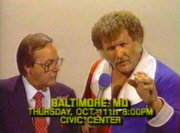
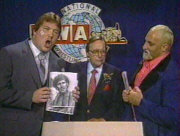
This show was a collaborative effort of sorts where the Georgia group (Anderson, Ralph Freed, and Fred Ward) had talent help from several other territories. The first taping featured all the Georgia regulars (Brad Armstrong, Tim Horner, Ronnie Garvin, Ted Oates, Rip Rogers, Paul Ellering and the Road Warriors, Mike Jackson, and others) as well as Ted DiBiase (All Japan Pro Wrestling) who worked for Ole when he wasn't touring Japan, Harley Race (Central States wrestling in Kansas City), Bob Armstrong (Continental/Southeastern Wrestling in Alabama), and Tully Blanchard (Jim Crockett Promotions in Charlotte.) They immediately began heavily hyping a huge show in Baltimore MD on Oct. 11 called the “Night of Champions”, the same name the NWA group used at the historic Meadowlands show earlier that year. NWA President Bob Geigel, Fred Ward, and PWI’s Bill Apter all made appearances on the show as well. It was an exciting program for fans, and demonstrated extraordinary cooperation between several different NWA promotions who were desperately trying to remain competitive against Vince McMahon’s WWF,  a juggernaut which now controlled all existing national wrestling programming.

Meanwhile, the Macon GA tapings continued for the syndicated markets in Georgia, and continued to be a separate program  from the WTBS show, although still both titled the same.

 
MEMPHIS INFLUENCE: THE "MERGER"

On October 20, the complexion of the WTBS program began to change. An announcement was made on WTBS of a “merger” of three promotions which included Championship Wrestling from Georgia, Jim Crockett Promotions, and (surprisingly for fans) Jarrett Promotions out of Memphis. The merger storyline was in actuality a loose agreement by the three promotions to trade talent, and have combined talent featured on the national program on WTBS.

On November 17, the syndicated show taped in Macon changed to a combined show of Memphis and Georgia regulars, hosted by both Lance Russell and Gordon Solie. This show aired in syndicated markets only, and did not last too long, although it's unclear when that arrangement ceased. Like many talent swapping arrangements between promoters, this one seemed to fall apart pretty quickly. Eventually, Ole Anderson’s group would be back on its own, with a show taped at WTBS studios and then aired on a delayed basis in the syndicated markets.

In the early months of 1985, Anderson’s roster began to take its final form, as the company began to struggle financially.  This group primarily consisted of Ole Anderson, Thunderbolt Patterson, Ron Garvin, Tommy Rich, Ron Starr, Scott “Hog” Irwin, Bob Roop, Ray Candy and others including the return of Buzz Sawyer, and a brief return of Gene Anderson.

 
THE WWF STALLS: ENTER BILL WATTS

During all this time that the Georgia program was continually changing and evolving, the WWF shows on WTBS remained basically the same format they had assumed on Black Saturday back in July. The shows openings and wrap-arounds were taped in the WTBS studios in front of the same blue "World Championship Wrestling" logo that had been used by Georgia Championship Wrestling since the fall of 1982. There were no "live" matches. The format consisted of Freddie Miller introducing taped matches from various WWF TV locations and pre-taped interviews usually conducted by Gene Okerlund. Later, Miller would occasionally be joined by a WWF wrestler in the WTBS studio.


The ratings for the two WWF weekend evening shows "World Championship Wrestling" and "Best of World Championship Wrestling", which had historically been two of the highest rated shows on all cable TV and certainly for WTBS when they were Georgia wrestling, began to drop. Ratings for Anderson's "Championship Wrestling from Georgia" show also suffered as the show languished in the early morning time slot, and as Anderson's talent pool grew thin and the company struggled financially. Ted Turner was unhappy with McMahon because Turner's original contract with Georgia Championship Wrestling included the proviso that the shows would originate from his WTBS studios. McMahon, who owned controlling interest in  GCW, maintained that he was meeting that obligation by having the show taped and hosted at WTBS, even though the wrestling was taped earlier somewhere else. Turner was adamant that the wrestling matches be taped in his studios, but McMahon was not interested in bearing the huge costs of flying in talent to Atlanta every week to produce the program. The two were nearly at an impasse.

McMahon blinked first. In January 1985, the WWF began taping matches in the WTBS studios. The show was hosted by Gorilla Monsoon and Freddie Miller and featured a new set. WWF wrestlers were flown in for the matches.

McMahon was now actively looking for a way to get out of the WTBS contract and Turner was reportedly waiting for the opportunity to throw McMahon off the station. Turner began entertaining the idea of having another major promotion on the station. Two promotions in particular competed for the slot: Jim Crockett's Mid-Atlantic Wrestling, which had been involved with the Anderson group since they started up after Black Saturday, and Bill Watt's Mid-South Wrestling.

Watt's would succeed in getting his hugely popular "Mid-South Wrestling" show on WTBS, airing mid-afternoon on Sundays.  Turner's plan was to eventually get out of the old Georgia contract that McMahon now owned, giving Bill Watts the entire wrestling package and Turner hoped to get into the business of promoting wrestling events with Watts. "Mid-South Wrestling" debuted on WTBS on March 10, 1985. It was the same show that aired in the Mid-South territory, but was on a four week delay, so as not to hurt his local show in its broadcast markets. The plan was to eventually produce a separate program exclusively for WTBS.

The result was that for a period of around three weeks, WTBS was airing wrestling from three different promotions: the WWF, Georgia, and Mid-South.

Around the time the Mid-South show debuted, Vince McMahon secured a deal with Jim Crockett to sell the WWF's TV time slots on WTBS to Jim Crockett Promotions. The deal was reportedly brokered by Jim Barnett, a major shareholder in GCW, now a McMahon ally, and a confidant of Ted Turner as well. Crockett reportedly paid McMahon one million dollars for the time slots, which ironically he probably could have obtained at some point anyway, as McMahon was eventually going to be off the station one way or another.

Crockett agreed to Turner's demand to tape exclusive shows from the WTBS studios, but Crockett insisted on being the exclusive promotion on Turner's station. Not only would he take the WWF's slots, but he would assume the early Saturday morning Georgia slot. The Mid-South mid-afternoon Sunday slot would be eliminated. Turner agreed, basically giving Jim Crockett the package that was originally going to go to Bill Watts. Now, just a few short weeks after McMahon had started taping live matches from the WTBS studio, the face of wrestling in Georgia was getting ready for another huge change.


CROCKETT PROMOTIONS TAKES OVER

On Saturday, March 30, “Championship Wrestling from Georgia” came on the air as usual, except this time it was Tony Schiavone who opened the program with Ole Anderson, and it quickly became apparent to viewers that something was significantly different. Along with a few of the Georgia regulars (Thunderbolt Patterson, Tommy Rich, and Buzz Sawyer) were many of the stars from Jim Crockett Promotions including Magnum TA, Dusty Rhodes, Jimmy Valiant, Tully Blanchard, the Barbarian, Paul Jones, and others.


The next week, April 6, 1985, Crockett Promotions debuted on the Saturday and Sunday evening time slots. That same Saturday morning,  the final airing of “Championship Wrestling from Georgia” took place and the following week a Crockett show titled simply “Championship Wrestling” aired in its place.

Turner honored his original agreement with Watts and the Mid-South show continued to air for the duration of their original three month contract. The final Mid-South show on WTBS aired May 26, 1985. In a very classy move and gesture of goodwill, Watts told viewers that they should  embrace the new Crockett programs and thanked viewers for watching his show while it had been on WTBS. "Mid-South Wrestling" had drawn tremendous ratings during its short run.

 
LOOSE ENDS

With the acquisition of all time slots on WTBS by Jim Crockett Promotions, and with Crockett now beginning his expansion nationally, an era had come to end.  The grand tradition of Georgia Wrestling as a major wrestling territory, which had died on Black Saturday but resurrected itself shortly thereafter, was now, sadly, gone for good in April of 1985.

Tony Schiavone had replaced Gordon Solie as the voice of NWA wrestling on the Superstation. Solie of course continued as host of “Championship Wrestling from Florida” which he had hosted for decades, as well as the new host for Continental Championship Wrestling show for promoter Ron Fuller out of Birmingham, AL.

Ole Anderson became a full time wrestler once again for Jim Crockett Promotions, and would remain a familiar face to wrestling fans for many more years on Superstation WTBS. Anderson would prove to be the common thread in Georgia wrestling that linked all eras together. He was a major part of Georgia Championship Wrestling in the 1970s and early 1980s both as a wrestler and a booker, the promoter of the resurrected Georgia promotion after Black Saturday, a top star for Crockett Promotions that followed on TBS, and would be heavily involved in Turner's WCW that rose from Turner's purchase of Jim Crockett Promotions in 1988. Anderson would continue as either a wrestler, manager, or booker until the mid-1990s.


A SUMMARY OF KEY DATES:
07/14/84 - "Black Saturday" - The WWF takes over the Georgia WTBS timeslots
07/21/84 - "World Championship Wrestling '84" debuts in GA towns, taped in Macon GA
08/04/84 - "Championship Wrestling from Georgia" debuts on WTBS
09/08/84 - "Championship Wrestling from Georgia" starts taping again at WTBS studios
01/27/85 - WWF "World Championship Wrestling" begins taping matches in the WTBS studio*
03/10/85 - "Mid-South Wrestling" debuts on WTBS
03/30/85 - Crockett Promotions takes over "Championship Wrestling from Georgia"
04/06/85 - Crockett takes over WWF timeslots, "World Championship Wrestling"
05/26/85 - "Mid-South Wrestling" final show on WTBS

© January 2008, Mid-Atlantic Gateway. Originally published on the Glory Days website, RIP
Do you have more info. E-mail us at midatlanticgateway@gmail.com
Special thanks to the following people who provided supporting information for this article: Dave Meltzer (WrestlingObserver.com) and David Bixenspan.

HOME  |  MID-ATLANTIC BOOK STORE  |  STUDIO DIRECTORY
ABOUT  |  CONTACT  |  MID-ATLANTIC GATEWAY  |  DOMED GLOBE

Wednesday, March 27, 2024

Georgia Championship Wrestling Studio (1982)

http://
The 1981-1982 set for Georgia Championship Wrestling


A few cool pictures taken by George Pantas during his 1982 visit to the WTBS television studios on Techwood Drive in Atlanta where Georgia Championship Wrestling was taped every Saturday morning, hosted by Gordon Solie.

George Pantas 

The familiar short-ring used for TV in Georgia in the late 1970s and early 1980s.

Sunday, June 19, 2016

Georgia Championship Wrestling

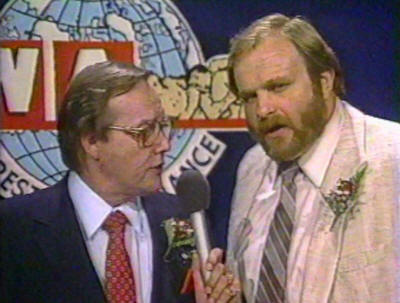
Gordon Solie interviews Tommy Rich and Mr. Wrestling II

The WTBS-17 studios in Atlanta were home to "Georgia Championship Wrestling" going back to the early 1970s and was later home to "World Championship Wrestling" for Jim Crockett Promotions in the mid-to-late 1980s.

An upcoming documentary called "6:05 on the SuperStation" will take a look back at the studio, station, wrestlers, and announcers who helped make wrestling on WTBS an institution on Saturday evenings. 

Jim Ross has joined up with the producers of "Mid-Atlantic Memories" documentary, and together  hope to present a similar feel-good film about a 20-year period in time when folks down south were glued to their TV sets at 6:05 p.m. on Saturdays and Sundays.

"6:05 On The SuperStation!" will be the first film produced by Ross, who said on his "Ross Report" podcast "We're gonna make a hell of a movie!"

The film will be fan-funded. More details can be found on the NWALegends.com website. The film also has a Twitter page where you can keep up with how things are progressing on the film.

(See also: Jim Ross Reveals First Film Project "6:05 on the SuperStation" )

http://bookstore.midatlanticgateway.com

Thursday, April 21, 2016

Man Behind the Mike: Jim Carlisle (Georgia)

SALUTE TO THE ANNOUNCER
Jim Carlisle, WRBL-TV, Columbus GA
Wrestling Revue Magazine, August 1972
(Includes rare audio clip below.)

Born, June 19, 1939, announcer Jim Carlisle of WRBL-TV, Channel 3, Columbus, Georgia, graduated from Jordan Vocational High School in Columbus in 1957. He's married to the former Miss Betty Ann Stokes of Columbus. They have one son — Derek Scott — born December 28, 1968.

Jim has been in the radio and television industry since December 2, 1955, having started while still in high school. He has worked at stations in Chattanooga, Tenn., Montgomery, Ala., Mobile, Ala., LaGrange, Georgia, and, of course, Columbus. Has now been with WRBL-TV, Channel 3, since September of 1965. Jim is very versatile on TV, having done just about every type of program that there is.

Jim Carlisle interviews Dick Steinborn
During the late 1960's, he did a very popular show for the younger set, called "Blast-Off with V-Man," a space-man type show. After V-Man appeared in a downtown Christmas parade one year, the Columbus newspapers came out with an article saying that V-Man drew more applause from the children, and seemed to be more popular with the children, than even Santa Claus himself.

Jim calls the action on TV Wrestling every Saturday afternoon at 4:00 on WRBL-TV.

He is also the ring announcer at the wrestling matches at the Columbus Auditorium every Wednesday night.

He also writes a column, "At Ringside With Jim Carlisle," for the official wrestling program which is sold every Wednesday night at the auditorium. He gives background information on the various wrestlers who see action in the Columbus ring.

All his wrestling activities are in association with promoter Fred Ward of Columbus.

Jim Carlisle in the ring
at the Columbus Municipal Auditorium

Jim's favorite past time and hobby is fishing. He goes just about every chance he gets. A member of the Loyal Order of Moose, Jim is a Past Governor of the Columbus, Georgia, Moose Lodge No. 1166. He is also a member of the Legion of the Moose.

Jim says that he enjoys his association with wrestling, and is glad the opportunity came his way a couple of years ago. His Saturday afternoon wrestling telecasts have proven to be extremely popular with the area fans.

Several of the wrestlers have told Jim that he is one of the best that they had ever heard at calling the action on TV. And, considering the fact that they had heard wrestling announcers all across the country, Jim considers this to be a great compliment.

Thanks to Carroll Hall for forwarding this article to us at the Mid-Atlantic Gateway.

* * * * *
Editors's note: Jim Carlisle was also the host of "Macon Championship Wrestling" that aired on channel 9 in Macon, GA in the 1970s.

Here is an audio clip of a promo for a card in Macon in 1977 featuring the voice of Jim Carlisle.


The music bed underneath is the opening live instrumental fanfare on Neil Diamond's iconic live LP "Hot August Night."


http://bookstore.midatlanticgateway.com

Thursday, September 10, 2015

Studio Wrestling in Augusta, GA

Live Wrestling premiered on channel 12 WRDW in Augusta, Georgia on March 26, 1956. The first commentator was Don McIntyre. He was assisted by Lou Stratton.

(Information from Carroll Hall's "Vintage TV & Wrestling Nostalgia" website.)

Saturday, June 27, 2015

Ed Capral in Atlanta (1972)


From the January 1972 issue of Wrestling Revue magazine. Ed Capral is at the broadcast desk with Bob Armstrong at the studios of WQXI-11 (now WXIA) in Atlanta. The photo was taken by Gene Gordon.

Capral came to Jim Crockett Promotions in 1975 to host the new program "Wide World Wrestling", and stayed there until 1978.


Thanks to Carroll Hall at All-Star Championship Wrestling for sending us these photos from his Wrestling Revue collection.